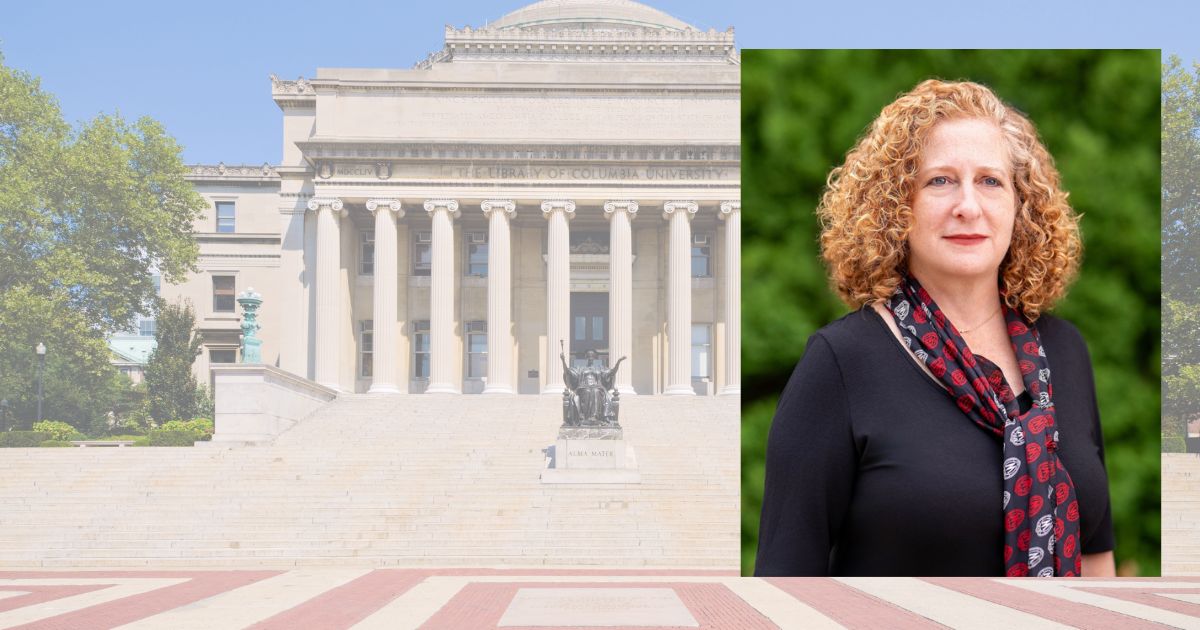
The Upper West Side’s largest and most storied institution turned a page Wednesday morning, as a new leader stepped into a job that has churned through three predecessors in barely two years — and before lunch, she’d already made a pledge that any Morningside Heights regular can appreciate.
Advertisement
Jennifer L. Mnookin officially became Columbia University’s 21st president on Wednesday, July 1, marking the first day of a tenure the university hopes will bring calm after a stretch of resignations, protests, and federal pressure. Columbia named its next president in January, but the job only became hers this week.In a message to the Columbia community posted to Columbia’s website, Mnookin leaned into themes of listening and dialogue, describing a university built to hold competing ideas in tension rather than smooth them over. She wrote that she would begin by “listening and learning widely” and seeking out a broad range of perspectives, and framed complexity itself as one of Columbia’s — and New York’s — defining strengths.
Then came the neighborhood note. Mnookin told the community she looked forward to “plenty of return visits to the Hungarian Pastry Shop,” the Amsterdam Avenue café near the Cathedral of St. John the Divine that she said has been a favorite since she first set foot on campus more than 40 years ago. It was a small, local flourish in an otherwise weighty address, and a signal that the incoming president knows the turf.
Mnookin, 58, arrives from the University of Wisconsin–Madison, where she served as chancellor of a public flagship enrolling more than 50,000 students. A nationally recognized legal scholar whose work centers on evidence, forensic science, and wrongful convictions, she holds degrees from Harvard, Yale Law School, and MIT, where she earned a doctorate in the history and social study of science and technology. She and her husband, political theorist Joshua Foa Dienstag, have two children.
She inherits an institution still absorbing the aftershocks of the past two years. Columbia’s leadership was upended by protests and mass arrests over the war in Gaza and by a standoff with the Trump administration that led to frozen research funding and layoffs. Last summer, the university agreed to a $200 million settlement with the federal government, plus $21 million to resolve employment-discrimination claims, in a deal that restored funding while drawing criticism from faculty over academic independence. That federal scrutiny has reached individual students, too; earlier this year, agents briefly detained a senior before her release hours later.
Advertisement
Mnookin nodded to that turbulence obliquely, writing that universities nationwide are being “asked fundamental questions about their purpose and value” and that Columbia’s answers must be demonstrated rather than assumed. She closed with a piece of campus lore: the story that Columbia lent George Washington its first telescope during the Revolutionary War, only for the instrument to vanish after the Battle of Long Island and never return. A telescope, she offered, expands what can be seen — much like a university.She also thanked Claire Shipman, who led as acting president for roughly 15 months during the transition. Student reaction, as the Columbia Spectator has reported, has ranged from cautious optimism about a return to stability to unease over her handling of a pro-Palestinian encampment at UW–Madison, where she authorized police to clear tents before later negotiating a peaceful resolution.
For now, the neighborhood’s newest boldface name has a to-do list that runs from federal negotiations to faculty trust — and, apparently, a standing order at a pastry shop just off campus.
Have a news tip? Send it to us here!